

If you’ve been dealing with a sharp, nagging pain on the outside of your hip when you walk or climb stairs, a tender swollen elbow that makes leaning on a desk miserable, or a shoulder that aches every time you reach overhead, you may be experiencing bursitis. This common condition can quietly disrupt daily life, work, and the activities that make Jacksonville living enjoyable—whether that’s walking the beaches, playing pickleball, gardening, or simply getting through a long day behind the wheel.
At ChiroCure Health Center, founded by board-certified chiropractic physician Dr. Emilio Cosio, we see patients of all ages dealing with bursitis and the biomechanical issues that often underlie it. Our approach is drug-free, root-cause focused, and personalized. This in-depth guide explains what bursitis is, why it develops, how chiropractic care can help, and what you can expect when you visit our clinic at 8833 Perimeter Park Blvd, Suite 102, Phase II in Jacksonville.
What Exactly Is Bursitis?
Bursae (singular: bursa) are small, fluid-filled sacs that act as cushions between bones, tendons, muscles, and skin near your joints. They reduce friction so movement stays smooth. When a bursa becomes inflamed, the condition is called bursitis. The inflamed sac fills with excess fluid, becomes swollen and tender, and creates pain that worsens with pressure or specific movements.
Bursitis most commonly affects:
- The shoulder (subacromial bursitis)
- The hip (trochanteric bursitis, on the outside of the hip)
- The elbow (olecranon bursitis)
- The knee (prepatellar or other bursae)
- Occasionally the heel or other areas
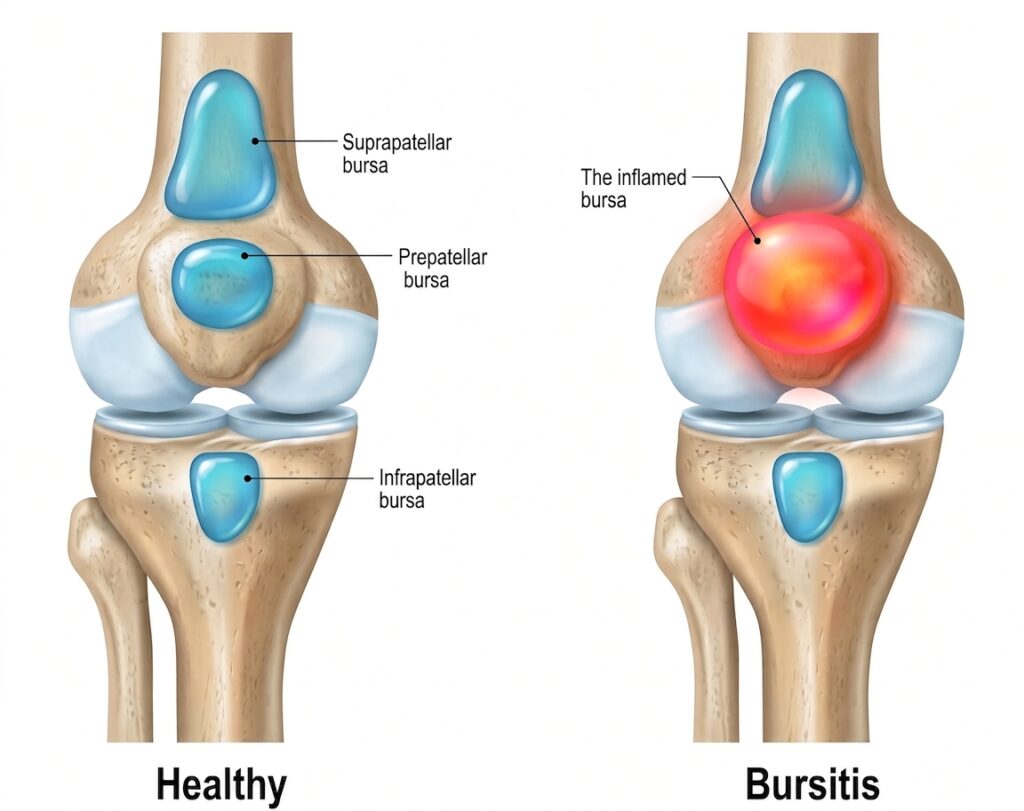
The condition is sometimes called the “working man’s disease” because repetitive motions and sustained pressure are frequent triggers. It becomes more common after age 40 as tissues lose some elasticity and recovery capacity declines, but it can affect active younger adults, athletes, and people whose jobs involve repetitive strain.
Common Causes and Risk Factors
Bursitis rarely appears out of nowhere. Most cases stem from mechanical overload or irritation of the bursa. Key contributors include:
- Repetitive motion or pressure: Overhead work, throwing sports, kneeling (carpet layers, gardeners), leaning on elbows for long periods, or prolonged side-lying.
- Sudden increase in activity: Ramping up running, lifting, yard work, or sports too quickly.
- Biomechanical problems: Poor posture, forward head and rounded shoulders that narrow the subacromial space, hip weakness or tight IT band that increases friction over the greater trochanter, leg-length differences, or gait changes after an injury.
- Spinal and pelvic dysfunction: Misalignments or restricted motion in the neck, mid-back, lower back, or sacroiliac joints can alter how the shoulders and hips move, placing uneven stress on bursae.
- Direct trauma: A fall or blow to the joint.
- Systemic factors: Arthritis, gout, or inflammatory conditions that make tissues more irritable. (Note: septic or infected bursitis is less common and requires medical evaluation, especially if fever, significant redness, or warmth is present.)
In Jacksonville’s active population—truck drivers sitting for long hours, office workers with tech-neck posture, weekend warriors, and seniors staying mobile—these mechanical factors show up frequently in our exam rooms.
Recognizing the Symptoms
Typical signs of bursitis include:
- Localized pain that may start as a dull ache and become sharper with movement or pressure
- Tenderness when pressing on the area
- Swelling (more noticeable in superficial bursae such as the elbow or knee)
- Stiffness and reduced range of motion
- Pain that worsens at night (especially hip bursitis when lying on the affected side) or with specific activities
- Occasionally warmth or mild redness
Hip bursitis often produces pain on the outer hip that radiates down the thigh. Shoulder bursitis frequently overlaps with impingement and can make reaching, dressing, or sleeping difficult. Knee and elbow versions create obvious swelling and sensitivity to contact.
If symptoms include fever, rapid swelling, intense redness, or inability to move the joint at all, seek prompt medical attention to rule out infection or other serious issues.
Why Chiropractic Care Makes Sense for Bursitis
Traditional approaches often center on rest, ice, anti-inflammatory medication, activity modification, and sometimes corticosteroid injections. These can calm acute inflammation, but they do not always correct the underlying movement patterns or joint restrictions that caused the bursa to become irritated in the first place. When the mechanical drivers remain, symptoms tend to return.
Chiropractic care addresses the bigger picture. The goal is not to “adjust the bursa” but to restore proper joint motion, improve muscle balance and soft-tissue mobility, and reduce the abnormal stresses that keep inflaming the tissue.
Research and clinical experience support this biomechanical approach. Restoring motion in the spine and related joints can improve coordination, reduce compensatory muscle tension, and allow the irritated bursa a better environment in which to calm down. Soft-tissue techniques further decrease local guarding and improve circulation. Combined with targeted exercises and practical advice, many patients experience meaningful pain reduction and restored function without relying solely on medication.
At ChiroCure Health Center we emphasize gentle, precise care suitable for a wide range of patients—including those who prefer to avoid or minimize medications and invasive procedures.
How We Approach Bursitis at ChiroCure Health Center
Every patient begins with a thorough evaluation. Dr. Emilio Cosio and our team take a detailed history, perform orthopedic and neurological testing, assess posture and movement patterns, and evaluate range of motion in the affected joint and related areas (spine, pelvis, contralateral side). When indicated, we discuss imaging or referral to rule out other conditions.
Treatment plans are individualized and commonly include:
1. Chiropractic adjustments and joint mobilization
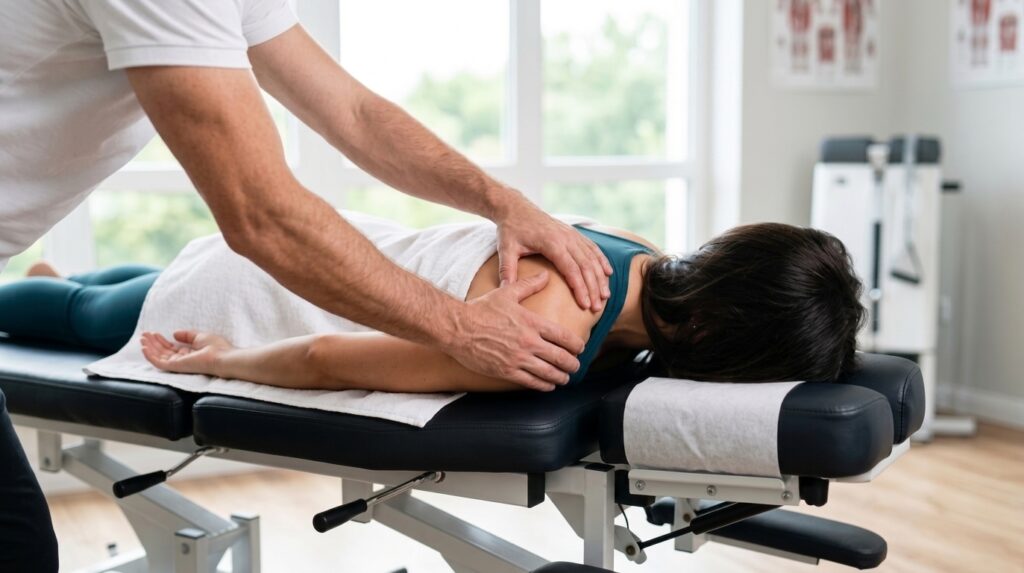
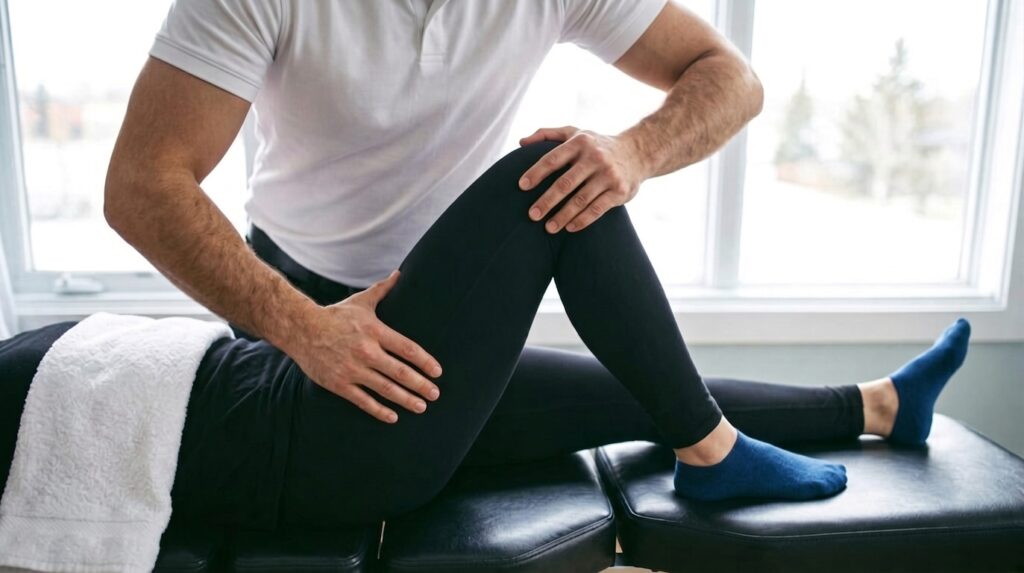
Gentle, precise adjustments restore proper motion to restricted spinal segments, the shoulder complex, hip, pelvis, or other involved joints. Improved alignment and mobility reduce the abnormal loading that irritates the bursa. For shoulder cases this often involves the cervical and thoracic spine as well as the glenohumeral and acromioclavicular joints. For hip bursitis, attention to the lumbar spine, sacroiliac joints, and pelvis is frequently essential.
2. Soft-tissue therapy
Techniques to release tight muscles, trigger points, and fascial restrictions around the affected area decrease pressure on the bursa and improve local circulation. This may include myofascial work, instrument-assisted soft tissue mobilization, or other hands-on methods.
3. Therapeutic modalities
Our clinic offers therapeutic ultrasound, which uses sound waves to increase blood flow, reduce inflammation, and support tissue healing in deeper structures.
4. Rehabilitative exercises and stretches
Once acute irritation settles, progressive exercises address muscle imbalances—strengthening weak stabilizers (such as gluteal muscles for hip bursitis or rotator cuff and scapular stabilizers for the shoulder) and stretching tight structures (IT band, hip flexors, pectorals, etc.). Home exercise programs empower patients to maintain gains between visits.
5. Posture, ergonomics, and lifestyle guidance
Practical recommendations for sitting posture (especially relevant for drivers and desk workers), sleep positioning, activity modification, and gradual return to exercise help prevent recurrence. For commercial drivers who visit us for DOT physicals, we often discuss cab ergonomics and movement strategies during long hauls.
This multi-modal, root-cause focus aligns with our clinic philosophy: Achieve. Activate. Revitalize. We aim not only for short-term symptom relief but for lasting improvement in how you move and feel.
What Results Can Patients Expect?
Many people notice reduced pain and improved mobility within the first few visits, especially when care begins early. More chronic or severe cases typically require a series of treatments combined with consistent home care. Because we address contributing factors throughout the kinetic chain, patients often report secondary benefits such as better overall posture, reduced related neck or back discomfort, and greater confidence in daily activities and exercise.
Chiropractic care is non-invasive and drug-free, making it an appealing option for those who want to minimize medication use or avoid repeated injections when possible. Of course, results vary. In cases of significant acute inflammation, infection, or advanced structural changes, we coordinate with other providers as needed.
Practical Self-Care Tips While Seeking Professional Help
While professional evaluation is important, these measures often support recovery:
- Relative rest and activity modification (avoid the specific positions or motions that sharply increase pain, but keep gentle movement within comfortable ranges).
- Ice for 10–15 minutes several times a day in the acute phase.
- Proper positioning: for hip bursitis, try sleeping on the opposite side with a pillow between the knees; for shoulder cases, avoid prolonged overhead work and consider supportive sleep postures.
- Gradual return to activity once pain allows, focusing on form and strength.
- Maintain good overall posture and take movement breaks if your work involves prolonged sitting or repetitive tasks.
These steps complement in-clinic care; they are not a substitute for identifying and correcting underlying mechanical issues.
Prevention Strategies for Active Jacksonville Lifestyles
Preventing recurrence involves the same principles that guide treatment:
- Build balanced strength and mobility around key joints.
- Progress activity levels gradually.
- Address posture and workstation setup proactively.
- Maintain spinal and pelvic mobility through regular movement and, when helpful, periodic chiropractic check-ups.
- Listen to early warning signs—mild tightness or ache—before they escalate into full inflammation.
For athletes, weekend warriors, and professionals whose jobs place repetitive demands on the body, proactive care can help keep bursitis from becoming a recurring problem.
When to Seek Care at ChiroCure Health Center
Consider scheduling an evaluation if:
- Joint pain and stiffness are limiting your work, sleep, or favorite activities
- Symptoms have persisted beyond a couple of weeks of simple rest and ice
- You notice reduced range of motion or compensatory movement patterns
- You prefer a natural, hands-on approach focused on the root mechanical causes
- You are already a patient for other concerns (back pain, headaches, sports performance, DOT physicals) and want integrated care
No referral is required. We verify insurance benefits and offer convenient scheduling, including same-day appointments when available. Our Southside Jacksonville location provides free parking and a professional, welcoming environment for patients of all ages—from children and busy parents to seniors, athletes, and commercial drivers.
Take the Next Step Toward Comfortable Movement
Bursitis does not have to dictate how you move through life in Jacksonville. By addressing the biomechanical factors that overload the bursae—through precise chiropractic adjustments, soft-tissue care, targeted rehabilitation, and practical guidance—many patients regain pain-free function and return to the activities they enjoy.
At ChiroCure Health Center, Dr. Emilio Cosio and our team are committed to personalized, evidence-informed, drug-free care that helps you achieve better mobility, activate your body’s healing capacity, and revitalize your overall well-being.
Ready to get started? Call us at (904) 616-8454 or book online at ChiroCureCenter.com. We look forward to helping you move better and feel better.
ChiroCure Health Center 8833 Perimeter Park Blvd, Suite 102, Phase II Jacksonville, FL 32216. Phone: (904) 616-8454. Website: www.ChiroCureCenter.com
This article is for educational purposes and does not replace individualized medical advice. Always consult a qualified healthcare provider for diagnosis and treatment recommendations specific to your situation.