
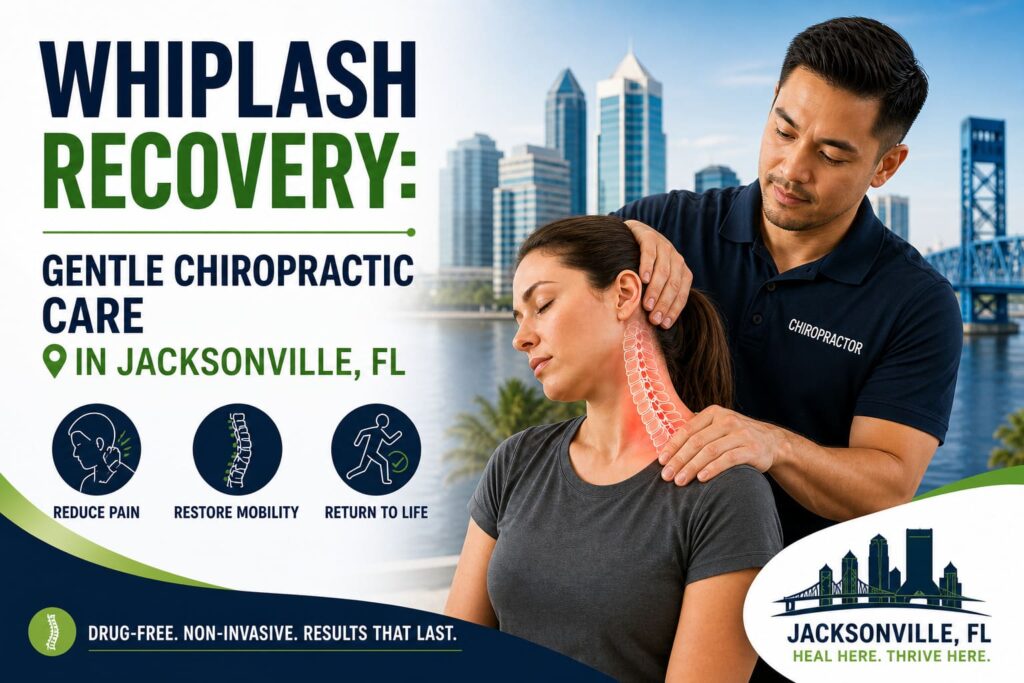
Waking up after a car accident with sharp neck pain that makes simple movements excruciating? Or perhaps you notice increasing stiffness, headaches, and fatigue days later? If you’ve been in any sudden impact—especially a rear-end collision common on Jacksonville roads like I-95 or the Buckman Bridge—you may be experiencing whiplash.
At ChiroCure Health Center, we’ve helped countless Jacksonville residents move past this painful condition using gentle, drug-free chiropractic care that targets the root cause rather than just masking symptoms with medication. This comprehensive guide explains whiplash, its effects on your body, and exactly how our personalized treatments can help you recover fully and prevent long-term issues.
Understanding Whiplash: The Anatomy Behind the Injury
Whiplash, medically known as a cervical acceleration-deceleration injury, occurs when the head is suddenly and violently thrown backward and then forward (or side-to-side). This rapid motion strains the delicate structures of the neck.
Key structures affected include:
- Cervical vertebrae (C1-C7): The seven small bones in your neck can become misaligned.
- Intervertebral discs: These shock absorbers may bulge or become irritated.
- Muscles and ligaments: Soft tissues stretch or tear, leading to spasms and instability.
- Nerves: Compression or irritation causes pain, tingling, or headaches.
Imagine your neck as a spring. A sudden force compresses and then hyperextends it unnaturally. In the first phase (rear impact), the lower neck flexes while the upper extends, creating an “S” curve. Then the whole neck hyperextends before rebounding into hyperflexion. This sequence puts enormous stress on tissues not designed for such extreme motion.
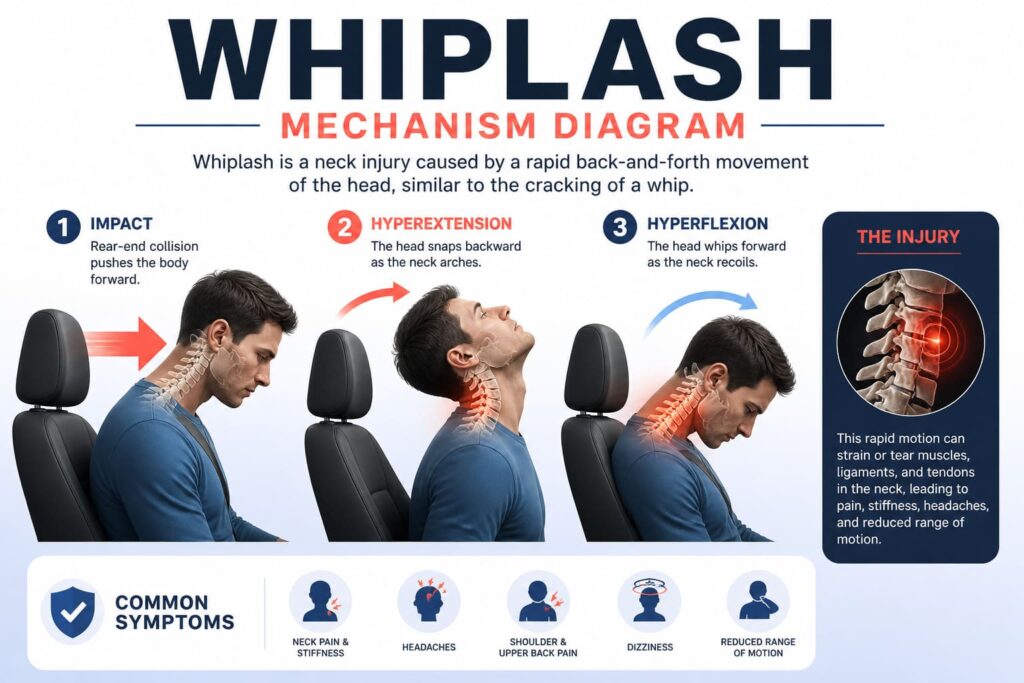
This explains why symptoms can be delayed—initial adrenaline masks pain, while inflammation builds over hours or days.
Common Causes in Jacksonville
While car accidents are the leading cause, other incidents include:
- Sports collisions (football, soccer, cycling)
- Slip-and-falls on wet Florida sidewalks or during storms
- Workplace injuries, especially for truck drivers and manual laborers
- Recreational activities like boating or amusement parks
Our clinic sees many patients who were rear-ended at stoplights on Southside or Beach Boulevard. Even low-speed impacts (under 20 mph) can cause significant injury because the body isn’t prepared for the force.
Recognizing the Symptoms Early
Whiplash symptoms vary widely. Common ones include:
- Neck pain and stiffness, especially in the morning
- Limited range of motion—difficulty checking blind spots while driving
- Tension headaches starting at the base of the skull
- Shoulder, upper back, or radiating arm pain
- Dizziness, balance issues, or visual disturbances
- Jaw pain (TMJ symptoms)
- Fatigue, irritability, and sleep disruption
- Concentration difficulties (“brain fog”)
When to seek care immediately: Severe pain, numbness, weakness in arms, or symptoms after a high-impact crash. These could indicate more serious issues like fractures or disc herniations.
Practical Action Step: Keep a simple symptom journal for the first week—note pain levels (1-10), triggers, and what provides relief. Bring it to your appointment at ChiroCure.
The Risks of Ignoring Whiplash
Many people assume “it will go away on its own.” Unfortunately, untreated whiplash can lead to chronic neck pain, degenerative changes, persistent headaches, and reduced quality of life. Early intervention is one of the strongest predictors of full recovery.
How Chiropractic Care at ChiroCure Health Center Helps
Founded in 2016 by Dr. Emilio Cosio, a board-certified chiropractic physician, ChiroCure Health Center offers personalized, root-cause care in our convenient Perimeter Park location. We serve families, athletes, seniors, and professional drivers with gentle techniques suitable for all ages.
Our multi-modal approach typically includes:
- Thorough Evaluation — Detailed history, orthopedic/neurological tests, posture analysis, and range-of-motion assessment. We may refer for imaging if needed.
- Gentle Chiropractic Adjustments — Precise, low-force corrections restore alignment, reduce nerve irritation, and improve mobility. Many patients feel immediate relief in neck motion.
- Therapeutic Ultrasound — Deep-penetrating sound waves boost circulation, reduce swelling, and speed soft tissue healing.
- Interferential Electro-Therapy — Comfortable electrical stimulation relieves pain and spasms quickly by stimulating endorphin release.
- Myofascial Release Therapy — Hands-on work releases muscle knots and adhesions for better flexibility.
- Kinesiotaping — Supportive tape application provides ongoing stability and lymphatic drainage between visits.
- Nutritional Counseling — Advice on anti-inflammatory foods, hydration, and supplements (like omega-3s or turmeric) to support healing from the inside.

Treatment frequency often starts higher (2–3 visits per week) and tapers as you improve. A typical mild-to-moderate case may need 6–12 sessions, but we customize everything.
Recovery Timeline and What to Expect
- Days 1–7 (Acute Phase): Focus on pain control, inflammation reduction, and gentle mobility. Ice, rest, and initial therapies.
- Weeks 2–4: Restore range of motion, strengthen supporting muscles, and correct posture.
- Weeks 4–8+: Functional rehabilitation, return to normal activities, and prevention strategies.
Most patients notice significant improvement within the first 2–4 weeks with consistent care.
7 Safe At-Home Exercises for Whiplash Recovery
Always get cleared by your chiropractor first. Perform these gently—stop if pain increases.
- Chin Tucks — Sit or stand tall. Gently draw your chin straight back (like making a double chin). Hold 5 seconds. 10 reps. Strengthens deep neck flexors.
- Neck Rotations — Slowly turn head to one side, hold 10–15 seconds, then the other. 5–10 reps each side. Improves mobility.
- Side Tilts — Tilt ear toward shoulder without shrugging. Hold and repeat.
- Shoulder Rolls — Roll shoulders forward and backward to release upper trap tension.
- Scapular Retractions — Squeeze shoulder blades together. Hold 5 seconds.
- Thoracic Extension — Sit and gently arch upper back over a rolled towel.
- Isometric Resistance — Press head gently into hand in all directions for stability.
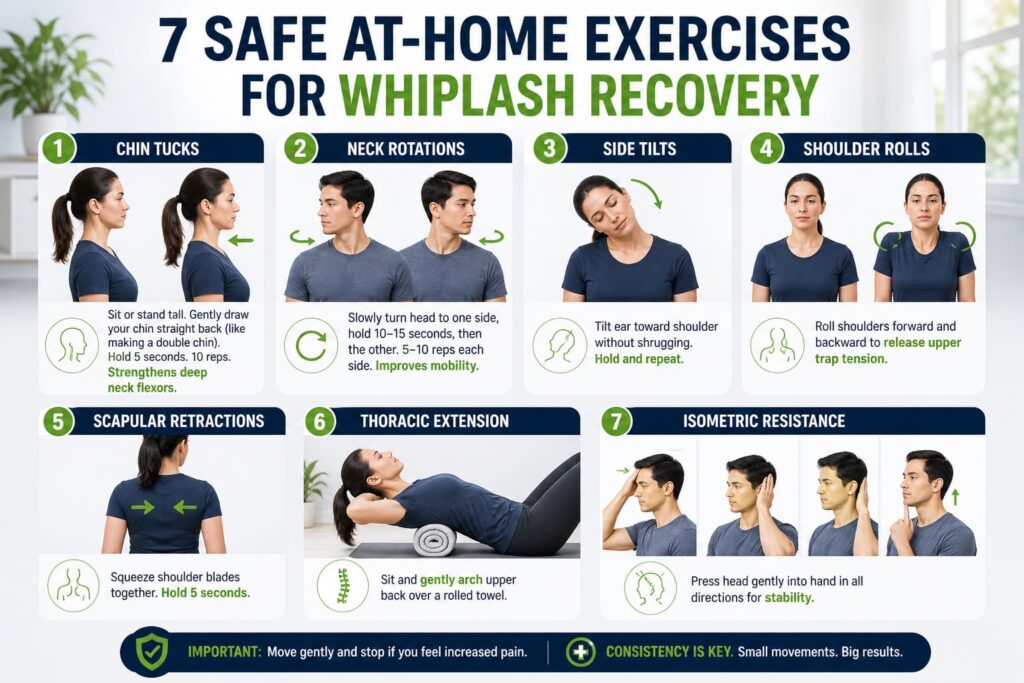
Pro Tip: Do these 2–3 times daily. Breathe deeply and move within pain-free range.
Prevention Tips for Jacksonville Drivers and Families
- Adjust headrest properly (top at ear level)
- Always wear seatbelts
- Maintain good posture while driving and working
- Strengthen neck and core muscles regularly
- Be extra cautious in rainy Florida weather
Real Patient Outcomes (Examples)
While individual results vary, many of our patients report being able to return to driving, playing with kids, or working pain-free after completing care. One common story: A local teacher rear-ended on Phillips Highway regained full neck rotation and eliminated daily headaches within six weeks.
Frequently Asked Questions
Is chiropractic safe for whiplash? Yes—when performed by a licensed professional using gentle techniques tailored to your injury stage.
Will I need surgery or medications? Most cases resolve with conservative care like ours. We focus on natural healing.
How soon after an accident should I come in? As soon as possible, ideally within days.
Do you work with insurance or attorneys? We help with documentation and accept most major insurances. Call us to discuss.
Your Next Step Toward Recovery
Don’t let whiplash control your life. At ChiroCure Health Center, our mission is to help you achieve, activate, and revitalize your optimum well-being through personalized chiropractic care.
Contact us today to schedule your initial whiplash evaluation. We offer flexible appointments and same-day options when available.
📍 8833 Perimeter Park Blvd, Suite 102, Jacksonville, FL 32216 📞 (904) 616-8454 Book Your Appointment Online
Dr. Emilio Cosio and the ChiroCure team look forward to partnering with you on your healing journey.
This article is for educational purposes only and is not a substitute for professional medical advice. Individual results may vary. Always consult a qualified healthcare provider.